
Jim Sciutto ’88 Explains the World
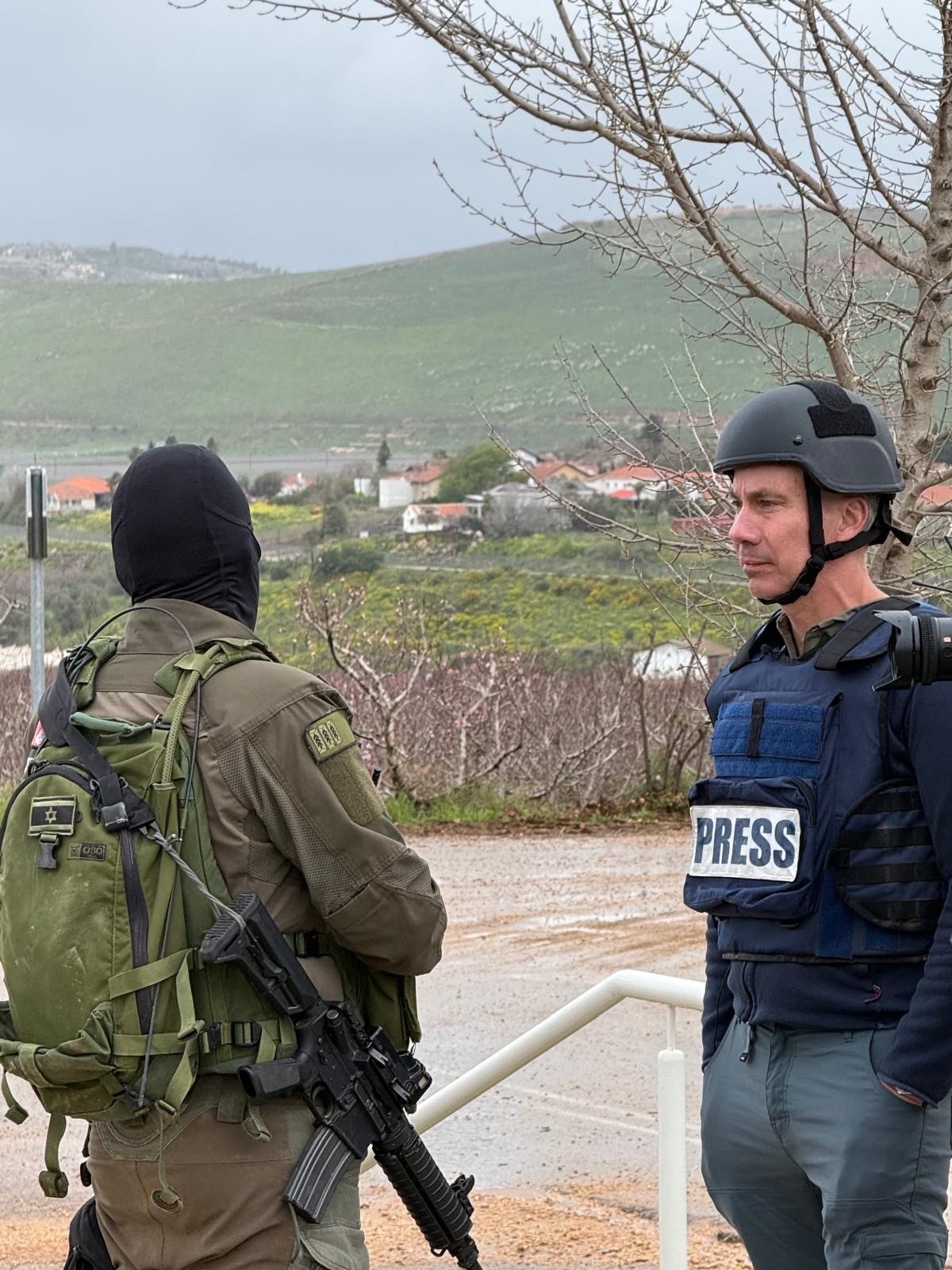
The Regis graduate has traveled the world to report on international affairs, from Afghanistan and Iraq to Ukraine and Israel. His work has never been more vital.
When Jim Sciutto ’88 was a student at Regis, he was a standout in the Hearn Speech and Debate Society. Back then, a student could do both debate and extemporaneous speaking at the same tournament, requiring, among other things, a great deal of intellectual stamina. Sciutto was a natural at both.
“He was one of the top debaters in the country and also one of the top extempers in the country in current events speaking,” remembers Mr. Eric DiMichele, Regis’s Director of Community Engagement and the longtime coach of the Hearn.
He was so great, in fact, that an opposing school’s coach once came up to Mr. DiMichele at a tournament and predicted big things for Sciutto’s future.
“This kid will be on CNN someday,” said the coach.
That coach was right. In a career that’s seen Sciutto report on some of the most significant international news stories of our time, since 2013 he’s served as an anchor and the chief national security analyst at CNN.
Journalism was in Sciutto’s blood from an early age. His mother was a groundbreaking broadcast journalist in Louisville who later went on to work at Newsweek and U.S. News & World Report. Sciutto’s family would watch the evening news together, and even at a young age, he was attuned to current events.
After graduating from Regis, he initially considered a career as a trial lawyer, and his first jobs were at law firms in New York. But he found the work uninteresting, and while studying at Yale, he began to think more seriously about a career in journalism. He began applying for jobs and reaching out to fellow Regis alumni who worked at newspapers, wire services, and television news shows.
One of those alumni was Mike Connor ’67, who was working on a half-hour business show called The Wall Street Journal Report. He offered Sciutto a job, and Sciutto began doing the grunt work of an early-career television journalist: coiling cable, working in the tape library, maybe sometimes running the teleprompter. But that was all he needed to pivot his career plans.
“Once I saw the nature of the work, it interested me,” said Sciutto. “I suppose you could say I got bitten by the bug. The more I explored it, the more it became what I wanted to do.”
As his interest in journalism was growing, so was his interest in international affairs. In 1989, his parents and two of his sisters had been in China during the Tiananmen Square protests and massacre, leaving the country the day martial law was declared. Yale was known as a great place to study China, and he took a course on modern China with the renowned professor and author Jonathan Spence, further piquing his interest. He declared his major in Chinese history and decided that he wanted to go somewhere overseas after college.
He won a Fulbright Scholarship that took him to Hong Kong, and while there, he did a story for a small local television station about the subject of his Fulbright research: press freedom in Hong Kong as China was taking over. He began doing more stories, and he wound up staying for five years, reporting in the region until he quit in protest when a story he reported on China’s treatment of foreign businesspeople was pulled after receiving complaints from the Chinese government.
He landed at a regional network called Asia Business News, and while there, began sending VHS tapes of his stories to American networks.
“I wasn’t great when I look back at those tapes, but I did have stories that I know they weren’t seeing from other people,” said Sciutto. “I had stories from Vietnam and Mongolia and Laos and South Korea during labor protests there. ABC ended up hiring me, and they told me, ‘We get a lot of tapes, but we don’t get a lot of tapes seeing people traipsing around Asia telling stories from these kinds of places.’”
After starting at ABC, Sciutto was initially based in the U.S. until the September 11 attacks necessitated more reporting from the Middle East. Sciutto was one of the first reporters at the network to raise his hand to go overseas, and he spent months in Afghanistan as a senior foreign correspondent at the outset of the war there. Peter Jennings, then the network’s evening news anchor, was a supporter of Sciutto’s work and encouraged the network to let him continue reporting from the region. Though he was based in London, he made dozens of trips to Afghanistan and Iraq during his decade working for ABC. “It was important work, and I wanted to cover these wars,” said Sciutto. “It was at times exhilarating, but it was also nerve-wracking.”
Indeed, the work could sometimes put him in harm’s way. In 2008, while embedded with a convoy of U.S. Marines in Afghanistan’s Helmand Province, the Humvee in front of him hit an IED. And while that was the closest call of his career, he’s frequently had to take the sort of precautions that come with the job. When Sciutto spoke with Regis Magazine this spring, he did so from Tel Aviv, where he’d just left the bunker he’d retreated to because of incoming Iranian missiles.
Following his time at ABC, Sciutto was hired as chief of staff to U.S. Ambassador to China Gary Locke, giving him an opportunity to be embedded in international affairs from a different angle. But he also began to miss the pace of the news business, and in 2013, CNN hired him as their chief national security correspondent, covering the defense and intelligence beats. Now based in Washington, he still spends a quarter of his time overseas in places like Israel and Ukraine, where he says he’s done the reporting he’s most proud of. He’s also the author of four books, including 2024’s The Return of Great Powers: Russia, China, and the Next World War, and he teaches a class at Yale’s Jackson School of Global Affairs.
Sciutto has been recognized many times for his reporting. Among the honors he’s received are the duPont-Colombia Award (as part of CNN’s coverage of the war in Ukraine), two Emmy Awards (for his reporting from Iraq), the Edward R. Murrow Award (for reporting from Iran during the 2009 election protests), the George Polk Award (for undercover reporting from Myanmar about the country’s repressive regime), and the White House Correspondents’ Association’s Merriman Smith Award (as part of CNN’s intelligence reporting on Russia in 2018).
Sciutto has been to more than 100 countries and has reported from some three-quarters of them, and as global affairs grow ever more complex, he says that this type of reporting is as important as ever.
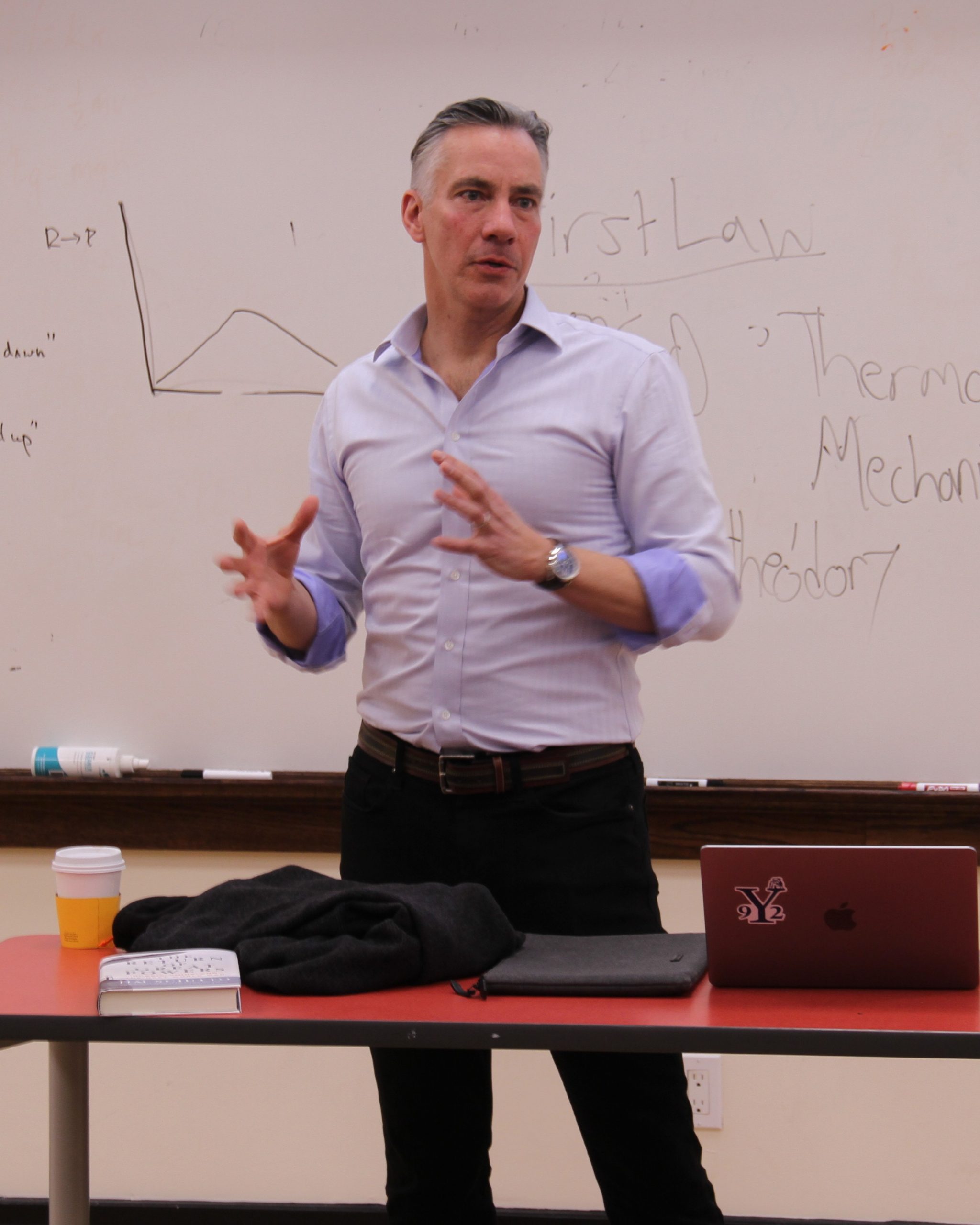
“Journalists do important work writing the first draft of history,” said Sciutto. “You’re trying to be an eyewitness to help people understand those events and why they’re important. And I think that the history around us is such that there are truly consequential things happening.” Sciutto and his family have long maintained a love for Regis. His parents continued to volunteer for the Hearn long after graduated, and he himself returned to 84th Street earlier this year to speak with students for a lively conversation on international affairs. And even as he reports on some of the most important stories in the world, he says that the skills he uses every day are ones he started to hone as a student.
“I always say that the Jesuits taught me how to think,” said Sciutto. “Friends say, ‘You think like a Regis guy,’ and that’s a badge of honor. They taught us to explore, investigate, question, and keep an open mind, but also to have the power of conviction and do your best to be guided by principles and values, not just in your life, but in your work. And those things stick with me.”
This article appears in the Spring 2026 issue of Regis Magazine.
Read more Regis news